The Distance Between Send and Signed
Henriksen told me something last week that I've been thinking about ever since.
He was sitting in the kitchen, drinking coffee, waiting for the tide to shift so he could unload the diesel. He had his phone out — he always has his phone out now — and he said, casually, the way people say things that change how you see the world: "I signed a contract this morning. The whole thing took forty seconds. The man who sent it was in São Paulo."
São Paulo. Twelve thousand kilometers from this rock. And the contract went there and came back signed before Henriksen's coffee got cold.
I've been keeper of this light for fifty-one years. In that time, I've signed every document by hand, on paper, with ink. But I'm not so old that I can't recognize when the world has found a better envelope.
The Old Distance
When I took this posting in 1975, signing a document at a distance was a project.
The maritime authority would mail me a form. It would arrive on the supply boat, sometimes two weeks after it was sent, sometimes three if the weather was bad. I would read it at the kitchen table, sign it, put it in an envelope, and give it back to the supply captain. He would mail it from Hammerfest. Two weeks later, it would arrive in Oslo. A month had passed. Nothing had happened except a signature traveling five hundred kilometers at the speed of a diesel boat and a postal van.
I once had a contract with a repair company for the foghorn mechanism. The negotiation — if you can call two men exchanging letters a negotiation — took four months. Not because we disagreed on anything. Because each letter took three weeks to make the round trip. We agreed on the price in the first exchange. The remaining three months were just paper catching up to a decision that was already made.
That was the old distance. Not the distance between two people, but the distance between intention and execution. You could agree in a moment, but the paperwork took months to formalize what both parties already knew.
What Email Changed
I don't use email. I've never sent one. But I've watched its effects on the world from this tower the way I watch weather systems — from a distance, noting the patterns.
The first thing email did was collapse the old distance. A document that once took weeks to deliver now takes seconds. The gap between "I agree" and "it's signed" shrank from months to minutes.
But that was just speed. What happened next was more interesting.
When signing was slow, people saved it for things that mattered. You wouldn't spend four months exchanging letters over something trivial. The friction of the process acted as a filter. Only the important agreements survived the effort.
When email made signing fast, people started signing everything. The friction vanished, and with it, the filter. Suddenly, every small transaction wanted a signature. Every agreement, no matter how minor, could be formalized, so it was.
I wrote once about the inflation of signatures — how signing everything means signing nothing. Email accelerated that inflation. It didn't cause it, but it removed the last natural barrier.
The Year Everything Learned to Fly
It's 2026 now, and Henriksen tells me that people sign documents entirely through email. Not just sending PDFs back and forth — that's been happening for years. He means the whole ceremony. Someone prepares a contract, sends it to an email address, and the other person signs it right there, from their inbox, without creating accounts or downloading anything or calling someone for help.
He showed me on his phone. I couldn't follow all of it, but I understood the shape of it. A message arrives. You read the document. You sign. It goes back. Done.
"No paper?" I asked.
"No paper."
"No stamps, no envelopes, no waiting for the supply boat?"
He laughed. "Gilberto, the supply boat hasn't carried mail in fifteen years."
He's right, of course. I just hadn't noticed because nobody sends me anything.
What the Lighthouse Sends
I think about email in terms of what I know, which is light.
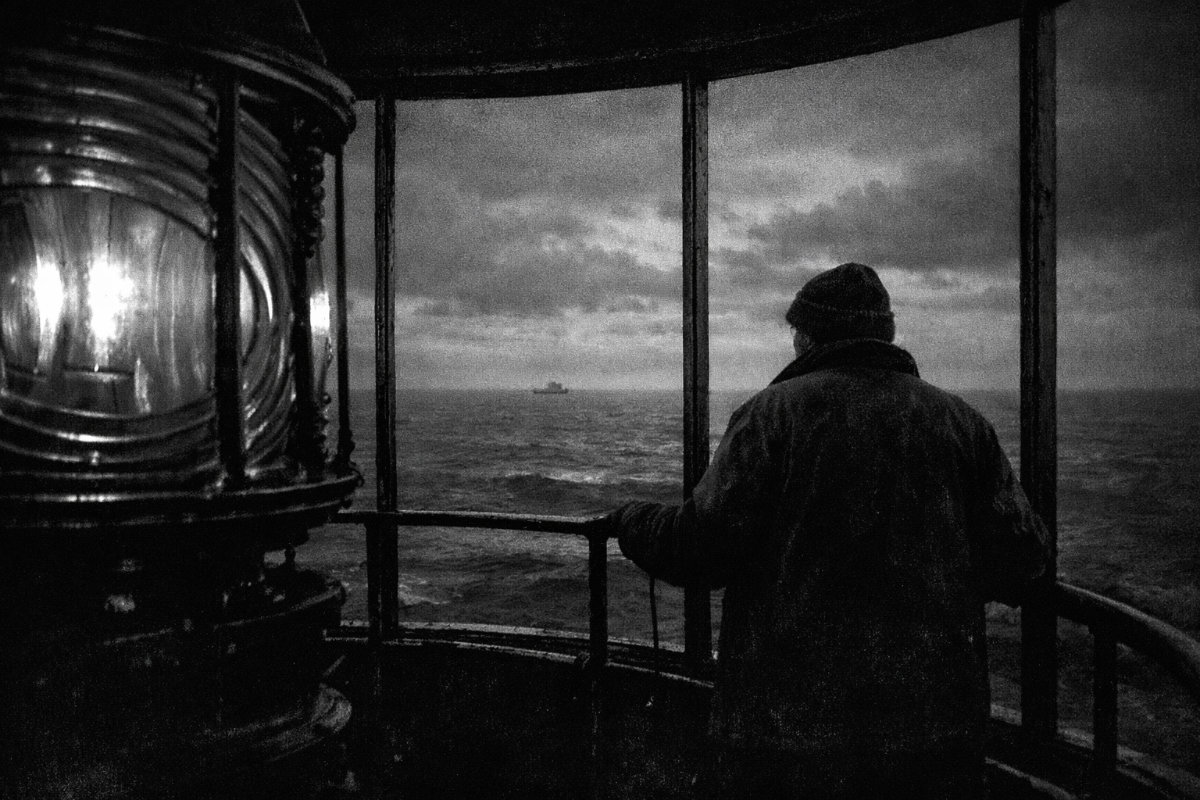
Every night, the Kråkeholm Light sends a message across the water. Three flashes, then dark. Three flashes, then dark. Every ship within twenty nautical miles receives it. They don't need to create an account. They don't need special equipment beyond eyes or a radar. The message just arrives — simple, clear, useful.
That's what the best communication tools do. They send the important thing without making you fight for it.
The worst tools put walls around the message. They make you prove who you are before they'll let you read it. They require you to learn their language, adopt their system, live inside their world. The message becomes secondary to the mechanism.
I've been sending the same message for fifty-one years, and the only technology I need is a lamp and a rotation schedule. I'm not against new tools. I'm against tools that make simple things complicated.
Signing a document by email — if it truly works the way Henriksen described — is a lamp, not a wall. The message arrives. You respond. The promise is made.
Trust at the Speed of Light
Here's what concerns me, though. And I say this as someone who has spent half a century in a profession built on reliability.
When things move fast, it's easy to stop paying attention.
The old distance forced you to think. Three weeks between sending and receiving meant three weeks to reconsider, to reread, to wonder if the terms were right. You couldn't sign impulsively because the process wouldn't let you.
Email signing in 2026 has no such delay. Forty seconds, Henriksen said. That's faster than I can read most documents, let alone consider them.
Speed is not the enemy. Thoughtlessness is. And speed enables thoughtlessness the way wind enables fire — not by creating it, but by spreading it.
So here is what I would say to the people signing contracts from their inboxes in forty seconds: the tool has given you back your time. Don't waste the gift. Use the minutes you saved to actually read what you're signing. Use the simplicity of the process to focus on the substance of the agreement. The friction is gone. That means the only thing between you and a bad decision is your own attention.
The lighthouse doesn't make the sea safe. It makes the dangers visible. You still have to steer.
The Envelope That Never Was
My father, the fisherman from the Azores, would have found all of this bewildering. A contract signed between strangers twelve thousand kilometers apart, in less time than it takes to bait a hook.
But I think he would have understood the principle. He made agreements every day at the fish market. A handshake, a price, a promise to deliver the catch before noon. No paper. No signatures. Just two people, face to face, deciding to trust each other.
Email signing isn't so different, when you think about it. It's just that the marketplace is larger and the handshake is digital. The agreement is still between two people. The promise is still the point.
The envelope was never the important part. The commitment inside it was.
In 2026, the envelope has finally disappeared. What remains is what always mattered — the words, the names, the willingness to be held to your word.
Twenty-five cents and an email address. That's all the envelope anyone needs now.
The Distance Remaining
Henriksen left with the tide, his phone in his pocket, contracts signed and forgotten. I went up to the lamp room to check the mechanism, the way I've done every afternoon for fifty-one years.
The light will come on at dusk. Ships will see it. The distance between this tower and those ships hasn't changed — it's still measured in nautical miles, still subject to fog and weather and the curvature of the earth. Some distances remain.
But the distance between an agreement and a signature — that old, slow, paper-and-postage distance — has been reduced to almost nothing. Send and signed. The gap is forty seconds and shrinking.
I don't mourn the old way. I mourn nothing that was merely slow. What I hope — and it's the same hope I've had since I first climbed this tower — is that speed serves the thing that matters.
The promise. The name. The willingness to stand behind what you've agreed to.
The distance between send and signed may be gone. But the weight of a signature should remain.
It's February, and the nights are still long up here. Seventeen hours of darkness, seventeen hours of keeping the light on. Henriksen's contract with the man in São Paulo will outlast this winter, I expect. Good agreements do that. They outlast the season they were signed in.
The light flashes. Three and dark. Three and dark. The oldest email I know.
Gilberto Mares has been keeper of the Kråkeholm Light for fifty-one years. He writes about time, tools, and the things that matter. He still does not have a smartphone.